

Allat
To read about more Goddesses, or Goddess archetypes, visit my page with a list of Goddesses.
Creator Goddess & Daughter of Allah
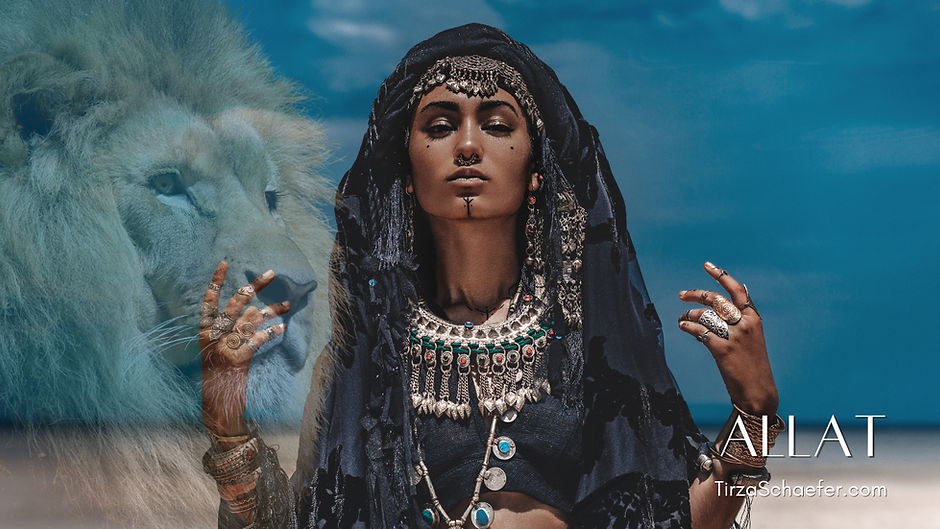
Allat, the pre-Islamic Arabian solar Goddess who was the daughter of Allah alongside her sisters Al-Uzza and Manat, was considered to be a creator Goddess but held various other functions from mercy to solitude, protecting travellers, meting out vengeance, granting abundance and gifting booty from raids, as well as inflicting pain and disease on enemies. In her temple, the common Arabian practice of casting divination arrows was a regular event, and she was worshipped in the form of a granite cube. Around this shrine, the area was held sacred and it was forbidden to take any life there, plant, animal or human.
Mecca
The Goddess cult was eradicated from the Arabian peninsula by Muhammad. Subsequently, an era of patriarchally structured culture and religion began which still lasts to the present day. As Goddess of creation, fertility and abundance, as well as of war and strife, Allat was worshipped by seven naked priestesses who circled her cubic stone, the Kabaa, in Mecca seven times, a ritual that is practised in Islam to this day by pilgrims. The seven rounds represented the seven known planets.
Feminine Power & Fertility
At the time of the Goddess’ worship, the Kabaa was guarded by priestesses who were called Bathisheba, girls of the old wise woman, or Bathsheba, meaning daughter of Sheba. The black stone at the Kabaa, which looks like a vulva with a baby’s head emerging, was used by women to rub their genitals against to increase their fertility and priestesses would smear menstrual blood on it as part of the cult. In all ancient cultures in which Goddess worship was part of the religious tradition, menstrual blood was seen as powerful and used in fertility and other magical rituals.